We are all created in HIS image and likeness and given the choice to choose peace or war.
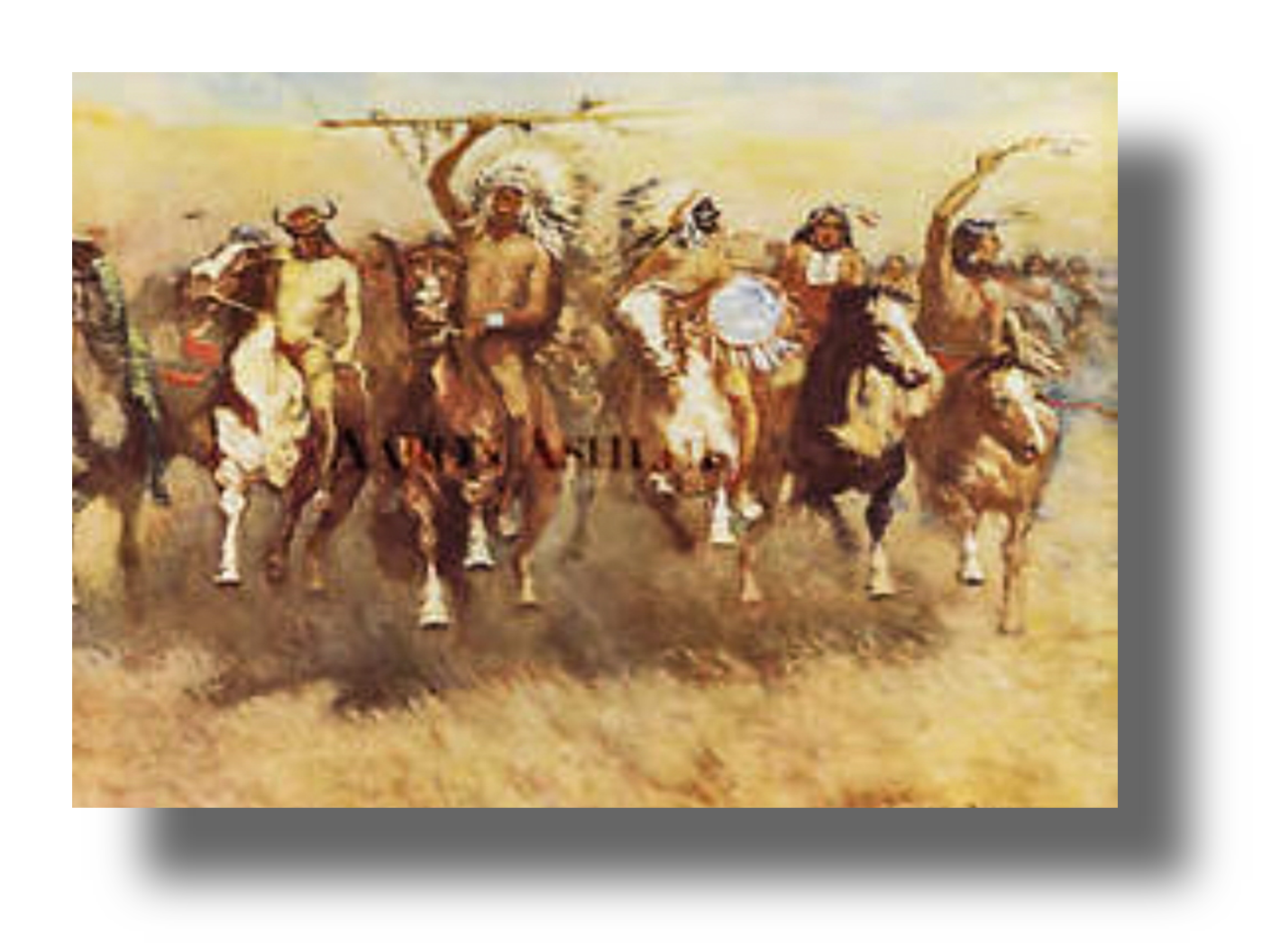
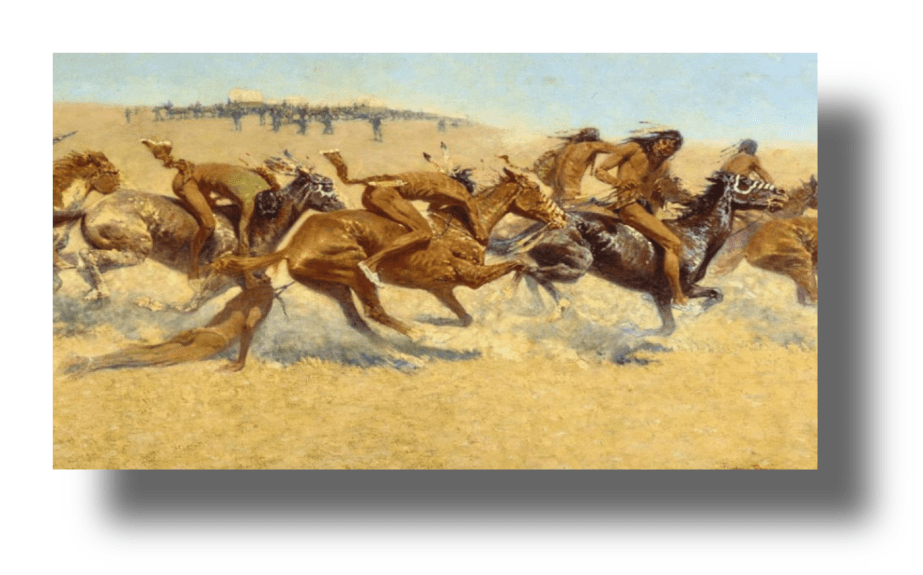
Native American Warfare in the West: Conflict Among the tribes.
Let me get this straight.
Do you mean humans are more alike then we have been indoctrinated to believe, and it wasn’t just,
“The White Man,” who was capable of such atrocities against humanity?
Indians did it also?
And we were all created in God’s image and likeness and given the choice to choose peace or war?
Genesis 1:26-27
26 “And God said, Let us make man in our image, after our likeness:“
https://www.google.com/amp/s/www.biblegateway.com/passage/%3fsearch=Genesis%2b1:26-27&version=KJV&interface=amp
That’s amazing…
Some would have you believe that everything oppressive is caused by,
“The Evil White Man” and that somehow America would be better off and a peaceful land if Columbus hadn’t come to America.
The irony of it all…
Here’s some interesting parts of history that are taboo to repeat in our society because they don’t want you to know that we, no matter what race, color or creed, are all alike, in every way shape and manner.

The reason they, “The elite” don’t want you to know is it will ruin their plans to divide and conquer!
If we’re not united against evil they win.
It’s not about color.
It’s about good vs evil.
And it’s probably time to choose sides and choose wisely because there are ONLY two sides to ONE GREAT STORY:
God’s or satan
You decide.

Below is an example of how the Indian tribes were and are no different than the white, black, Asian etc…
Native American Warfare in the West: Conflict Among the tribes.
Fighting in the Southwest during the fifteenth and sixteenth centuries followed the mourning-war pattern prevalent among the eastern woodland Indians. Like their eastern counterparts, both sedentary Pueblo Indians and semi nomadic tribes such as the Navajo warred to avenge the murder of their kinsmen. In important ways, however, warfare in the Southwest differed from that practiced in the eastern part of North America. First, semi sedentary Native Americans raided both other semi nomadic tribes and the Pueblo Indians in an effort to acquire material goods through plunder. More importantly, the Pueblo Indians living in and near the Rio Grande valley often fought wars that were more similar to European conflicts than to the woodland Indians’ blood feuds.
Semi Sedentary Tribes. Like their eastern neighbors, tribes such as the Apache and Navajo fought to avenge the deaths of kinsmen rather than to acquire territory. When a clan member was killed by Indians from another tribe, a war leader related to the deceased formed a war party composed of kinsmen and unrelated young men who sought the prestige that came through success in battle. After two nights of war dances and a day of feasting, the war party moved into enemy territory, where it took women and children captive and killed enemy warriors. Because semi-nomadic Indians such as the Navajo had to avenge every clan member killed by a rival tribe, blood-feud warfare was, as in the East, self-perpetuating and never ending.
Raiding Parties. There were, however, important differences between the objectives of eastern Indian warfare and the goals of their southwestern counterparts. While eastern Indians fought almost exclusively to achieve retribution, southwestern Indians clashed with their neighbors both to avenge previous wrongs and to loot them of material possessions. Apaches and Navajos, for example, raided both each other and the sedentary Pueblo Indian tribes in an effort to acquire goods through plunder. Though the distinction was missed by the Pueblo Indians and, later, by the Spanish, raiding parties differed substantially from war parties in terms of their objectives and their approach. While war parties sought to take captives and to achieve vengeance through killing, the smaller raiding parties hoped to avoid fighting and focused instead on taking booty. Raids often spawned blood feuds, though, because a tribe had to avenge the death of a warrior who died either in a raid or in an ensuing battle with pursuers.
Pueblo Indians. The sedentary Pueblo Indians of the Rio Grande valley likewise engaged in the vengeance-motivated
Warfare that was common to kinship-based societies. Pueblo warfare was not, however, limited to blood feuds. Living in and near the densely populated but resource-poor Rio Grande valley, Pueblo tribes such as the Hopis, Zunis, Piros, and Tewas fought with one another to secure control of the region’s limited supply of arable land. Such economically and territorially motivated warfare led the Pueblo Indians to make their adobe towns—called pueblos—powerful defensive fortifications. They did so by building their settlements atop steep mesas, by constructing their multistory buildings around a central plaza to form sheer exterior walls, and by limiting access to the main square to a single, narrow, easily defended passageway. Navajo and Apache raiding parties consequently found the Pueblo Indians’ settlements to be tempting but formidable targets.
Sources
George J. Gumerman, ed., Themes in Southwest Prehistory (Santa Fe, N.M.: School of American Research Press, 1994);
https://www.encyclopedia.com/history/news-wires-white-papers-and-books/native-american-warfare-west-conflict-among-southwestern-indians
Elizabeth H. John, Storms Brewed in Other Men’s Worlds: The Confrontation of Indians, Spanish and French in the Southwest, 1540–1795 (College Station: Texas A&M University Press, 1975);
https://www.encyclopedia.com/history/news-wires-white-papers-and-books/native-american-warfare-west-conflict-among-southwestern-indians
By Donna Jones Bowles AKA Dee Biggins
July 15, 2018














 iblogstr8sicit.WordPress.com