So God used him to rebuild humanity. Interestingly, Christopher Hitchens and other so called intellectuals still use these claims today! Even though they’re totally and easily disproved! They think that most people won’t bother to actually read the Bible… and that they’re very unlikely to search out the truth about Enoch, and that for most, short lying sound bites will suffice to convince them that the Bible’s fake and their armchair ‘atheist experts’ know best. These ‘intellectuals’ know full-well that they’re lying to and deceiving the masses, but, as long as their goal of discrediting God and the Bible are furthered… they’re happy. How does that saying go again? Something like…”A lie makes it’s way over the whole earth before the truth can get up and put on it’s pants.” Let’s change that. Share the truth about God and the Earth. Thank you for watching. God bless you….
Published on WordPress By Donna Brown Bowles January 2, 2023
(A Lukewarm Church.)
Rev. 3:14-22.
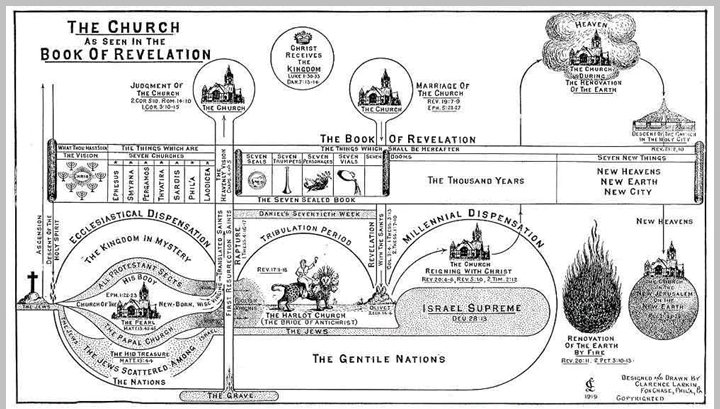
There is nothing more disgusting or nauseating than “tepid” water. So there is nothing more repugnant to Christ than a “tepid” church. He would rather have a church “frozen” or “boiling.” It was the “chilly spiritual atmosphere” of the Church of England that drove John Wesley to start those outside meetings which became so noted for their “religious fervor,” and it was the same “chilly atmosphere” of the Methodist Church that drove William Booth in turn to become a “Red-hot” Salvationist. Our churches today are largely in this “lukewarm” condition. There is very little of warm-hearted spirituality. There is much going on in them, but it is largely mechanical and of a social character. Committees, societies, and clubs are multiplied, but there is p. 28 an absence of “spiritual heat.” Revival meetings are held, but instead of waiting on the Lord for power, evangelists and paid singers are hired and soul winning is made a business. The cause of this “lukewarmness” is the same as that of the Church of Laodicea–Self-Deception. “Because thou sayest I am rich, and increased with goods, and have need of nothing; and knowest not that thou art wretched, and miserable, and poor, and blind and naked.” They thought they were rich, and outwardly they were, but Christ saw the poverty of their heart. There are many such churches in the world today. More so than in any other period in the history of the church. Many of these churches have Cathedral-like buildings, stained glass windows, eloquent preachers, paid singers, large congregations. Some of them have large landed interests and are well endowed, and yet they are poor. Many of the members, if not the majority, are worldly, card playing, dancing, and theatre going Christians. The poor and the saintly are not wanted in such churches because their presence is a rebuke. These churches do not see that they are wretched, miserable, poor, blind, and naked. If we were to visit such churches they would take pride in showing us the building, they would praise the preaching and singing, they would boast of the character of their congregations, the exclusiveness of their membership, and the attractiveness of all their services, but if we suggested a series of meetings for the “deepening of the Spiritual Life,” or the “conversion of the unsaved,” they would say–“Oh, no, we do not want such meetings, we have need of nothing.” The Church at Laodicea was not burdened with debt, but it was burdened with WEALTH. The trouble with the church today is that it thinks that nothing can be done without money, and that if we only had the money the world would be converted in this generation. The world is not to be converted by money, but by the Spirit of God. The trouble with the Church of Laodicea was that its “Gold” was not of the right kind, and so it was counseled to buy of the Lord “gold tried in the fire.” What kind of gold is that? It is gold that has no taint upon it. Gold that is not cankered, or secured by fraud, or the withholding of a just wage. What a description we have of these Laodicean days in James 5:1-4. But the Church of Laodicea was not only poor, though rich, it was blind. Or to put it more accurately–“Near-Sighted.” They could see their worldly prosperity, but were “Short-Sighted” as to heavenly things, so the Lord counseled them to anoint their eyes with “Eye-Salve.” Their merchants dealt in ointments and herbs of a high degree of healing virtue, but they possessed no salve that would restore impaired Spiritual Vision, only the Unction of the Holy One could do that. But the Church was not only poor, and blind, it was naked. Their outward garments were doubtless of the finest material and the latest fashionable cut, but not such as should adorn the person of a Child of God. So they were counseled to purchase of Christ “White Raiment,” p. 29 in exchange for the “raven black woolen” garments for which the garment makers of Laodicea were famous. Then a most startling revelation was made to the Church of Laodicea, Christ said– “Behold, I Stand at the Door and Knock.” These words are generally quoted as an appeal to sinners, but they are not, they are addressed to a Church, and to a Church in whose midst Christ had once stood, but now found Himself excluded and standing outside knocking for admittance. This is the most startling thing recorded in the New Testament, that it is possible for a church to be outwardly prosperous and yet have no Christ in its midst, and be unconscious of the fact. This is a description of a Christless Church. Oh, the EXCLUDED CHRIST. Excluded from His own nation, for they Rejected Him; excluded from the world, for it Crucified Him; excluded from His Church, for He stands outside its door Knocking for Entrance. How did Christ come to be outside the Church? He had been within it once or there never would have been a Church. How did He come to leave? It is clear that they had not thrust Him out, for they do not seem to have missed His presence. They continued to worship Him, to sing His praises, and engage in all manner of Christian service, yet He had withdrawn. Why? The reason is summed up in one word–Worldliness. But how is Christ to get back into His Church? Does it require the unanimous vote or invitation of the membership? No. “If any man hear my voice, and open the door, I will come in to him, and will sup with him, and he with Me.” That is the way to revive a lukewarm church is for the individual members to open their hearts and let Christ re-enter, and thus open the door for His reappearance. The character of the Church today is Laodicean, and as the Laodicean Period is to continue until the Church of the “New-Born” is taken out, we cannot hope for any great change until the Lord comes back. What do these “Messages to the Churches” teach us? They clearly teach the DECLINE OF THE CHURCH. That the professing Church instead of increasing in spiritual and world converting power will become lukewarm, faithless, and CHRISTLESS. In Paul’s Parable of the “Two Olive Trees” (Rom. 11:15-27), he shows how the “natural branches” of the “Good Olive Tree,” (Israel) were broken off because of UNBELIEF, that the “Wild Olive Tree” of the Church might be “grafted in,” which in turn, because of UNBELIEF, would be displaced that the “Natural branches” might be “grafted back again,” thus showing that the Church does not take the place of Israel permanently, but simply fills up the “Gap” between Israel’s “casting off” and “restoration to Divine favor.” As the Laodicean Period closes the “Church Age,” the Church disappears at the end of Chapter Three, and Israel comes again into view. See the Chart.
[Although this Gospel is, by some among the learned, supposed to have been really written by Nicodemus, who became a disciple. of Jesus Christ, and conversed with him; others conjecture that it was a forgery towards the close. of the third century by some zealous believer, who observing that there had been appeals made by the Christians of the former age, to the Acts of Pilate, but that such Acts could not be produced, imagined it would be of service to Christianity to fabricate and publish this Gospel; as it would both confirm the Christians under persecution, and convince the Heathens of the truth of the Christian religion. The Rev. Jeremiah Jones says, that such pious frauds were very common among Christians even in the first three centuries; and that a forgery of this nature, with the view above mentioned, seems natural and probable. The same author, in noticing that Eusebius, in his Ecclesiastical history, charges the Pagans with having forged and published a book, called “The Acts of Pilate,” takes occasion to observe, that the internal evidence of this Gospel produced, imagined it would be of service to Christianity to fabricate and publish this Gospel; as it would both confirm the Christians under persecution, and convince the Heathens of the truth of the Christian religion. Rev. Jeremiah Jones says, that such pious frauds were very common among Christians even in the first three centuries; and that a forgery of this nature, with the view above mentioned, seems natural and probable. The same author, in noticing that Eusebius, in his Ecclesiastical history, charges the Pagans with having forged and published a book, called “The Acts of Pilate,” takes occasion to observe, that the internal evidence of this Gospel shows it was not the work of any Heathen; but that if in the latter end of the third century we find it in use among Christians (as it was then certainly in some churches) and about the same time find a forgery of the Heathens under the same title, it seems exceedingly probable that some Christians, at that time, should publish such a piece as this, in order partly to confront the spurious one of the Pagans, and partly to support those appeals which had been made by former Christians to the Acts of Pilate; and Mr. Jones says, he thinks so more particularly as we have innumerable instances of forgeries by the faithful in the primitive ages, grounded on less plausible reasons. Whether it be canonical or not, it is of very great antiquity, and is appealed to by several of the ancient Christians. The present translation is made from the Gospel published by Grynæus in the Orthodoxographa, vol. i. tom. ii. p. 643.] p. 64
This is the most extraordinary book I have ever read from the Apocrypha; “The Lost Books of the Bible.” It’s 22 chapters. I put the last chapter Because it’s extremely important and amazing; however, the entire book is extraordinary! I’ve included a link that takes you to the entire Book of THE GOSPEL OF NICODEMUS. If you have the time please read this book. You will be amazed at how much information the elite has hidden from us for hundreds of years.
The GOSPEL of NICODEMUS, formerly called the ACTS of PONTIUS PILATE.
1 Pilate goes to the temple; calls together the rulers, and scribes, and doctors. 2 Commands the gates to be shut; orders the book of the Scripture; and causes the Jews to relate what they really knew concerning Christ. 14 They declare that they crucified Christ in ignorance, and that they now know him to be the Son of God, according to the testimony of the Scriptures; which, after they put him to death, they are examined.
AFTER these things Pilate went to the temple of the Jews, and called together all the rulers and scribes, and doctors of the law, and went with them into a chapel of the temple. 2 And commanding that all the gates should be shut, said to them, I have heard that ye have a certain large book in this temple; I desire you therefore, that it may be brought before me. 3 And when the great book, carried by four ministers of the temple, and adorned with gold and precious stones, was brought, Pilate said to them all, I adjure you by the God of your Fathers, who made and commanded this temple to be built, that ye conceal not the truth from me. 4 Ye know all the things which are written in that book; tell me therefore now, if ye in the Scriptures have found any thing of that Jesus whom ye crucified, and at what time of the world he ought to have come: shew it me.
5 Then having sworn Annas and Caiaphas, they commanded all the rest who were with them to go out of the chapel. 6 And they shut the gates of the temple and of the chapel, and said to Pilate, Thou hast made us to swear, O judge, by the building of this temple, to declare to thee that which is true and right. 7 After we had crucified Jesus, not knowing that he was the Son of God, but supposing he wrought his miracles by some magical arts, we summoned a large assembly in this temple. 8 And when we were deliberating among one another about p. 90 the miracles which Jesus had wrought, we found many witnesses of our own country, who declared that they had seen him alive after his death, and that they heard him discoursing with his disciples, and saw him ascending unto the height of the heavens, and entering into them; 9 And we saw two witnesses, whose bodies Jesus raised from the dead, who told us of many strange things which Jesus did among the dead, of which we have a written account in our hands.
10 And it is our custom annually to open this holy book before an assembly, and to search there for the counsel of God. 11 And we found in the first of the seventy books, where Michael the archangel is speaking to the third son of Adam the first man, an account that after five thousand five hundred years, Christ the most beloved Son of God was come on earth, 12 And we further considered, that perhaps he was the very God of Israel who spoke to Moses, Thou shalt make the ark of the testimony; two cubits and a half shall be the length thereof, and a cubit and a half the breadth thereof, and a cubit and a half the height thereof. 1 13 By these five cubits and a half for the building of the ark of the Old Testament, we perceived and knew that in five thousand years and a half (one thousand) years, Jesus Christ was to come in the ark or tabernacle of a body;.
14 And so our scriptures testify that he is the son of God, and the Lord and King of Israel. 15 And because after his suffering, our chief priests were surprised at the signs which were wrought by his means, we opened that book to search all the generations down to the generation of Joseph and Mary the mother of Jesus, supposing him to be of the seed of David; 16 And we found the account of the creation, and at what time he made the heaven and the earth and the first man Adam, and that from thence to the flood, were two thousand, two hundred and twelve years. 17 And from the flood to Abraham, nine hundred and twelve. And from Abraham to Moses, four hundred and thirty. And from Moses to David the king, five hundred and ten. 18 And from David to the Babylonish captivity, five hundred years. And from the Babylonish captivity to the incarnation of Christ, four hundred years. 19 The sum of all which amounts to five thousand and half (a thousand). 20 And so it appears, that Jesus whom we crucified, is Jesus Christ the Son of God, and true and Almighty God. Amen.
In the name of the Holy Trinity, thus end the Acts of our Saviour Jesus Christ, which the Emperor Theodosius the Great found at Jerusalem, in the hall of Pontius Pilate among the public records; the things were acted in the nineteenth year of Tiberius Cæsar, Emperor of the Romans, and in the seventeenth year of the government of Herod the son of Herod king of Galilee, on the eighth of the calends of April, which is the twenty-third p. 91 day of the month of March, in the CCIId Olympiad, when Joseph and Caiaphas were Rulers of the Jews; being a History written in Hebrew by Nicodemus, of what happened after our Saviour’s crucifixion.
50) Jesus said, “If they say to you, ‘Where did you come from?’, say to them, ‘We came from the light, the place where the light came into being on its own accord and established [itself] and became manifest/clear through their image.’ If they say to you, ‘Is it you?’, say, ‘We are its children, we are the elect/chosen of the Living Father.’ If they ask you, ‘What is the sign of your father in you?’, say to them, ‘It is movement and repose.'”
REPOSE: PEACE, TRANQUILITY A state of rest, sleep, or tranquility. A state of resting after exertion or strain especially : rest in sleep
Eternal or heavenly restpray for the repose of a soul
A harmony in the arrangement of parts and colors that is restful to the eye MOVEMENT: moving parts of a mechanism that transmit a definite motion
A series of organized activities working toward an objective also: an organized effort to promote or attain an end.
Definition of movement in motion
A sense of movement distinct structural unit or division having its own key, rhythmic structure, and themes and forming part of an extended musical composition The symphony consisted of three movements.
A particular rhythmic flow of language. Art movement. A harmonious arrangement of colors and forms, providing a restful visual effect.




 iblogstr8sicit.WordPress.com